
Why Truck Fleets Resist Driver-Facing Cameras
By Sam H. Nordean, Esq. · Trial Attorney & Founder
Many trucking companies resist inward-facing cab cameras due to driver retention backlash, California audio and event-recording limits, hardware costs, and the risk of creating undeniable video proof of distraction or fatigue. Because fleet dashcams often store short triggered clips or loop over footage quickly, California crash victims should send a preservation demand before critical video disappears.
On this page
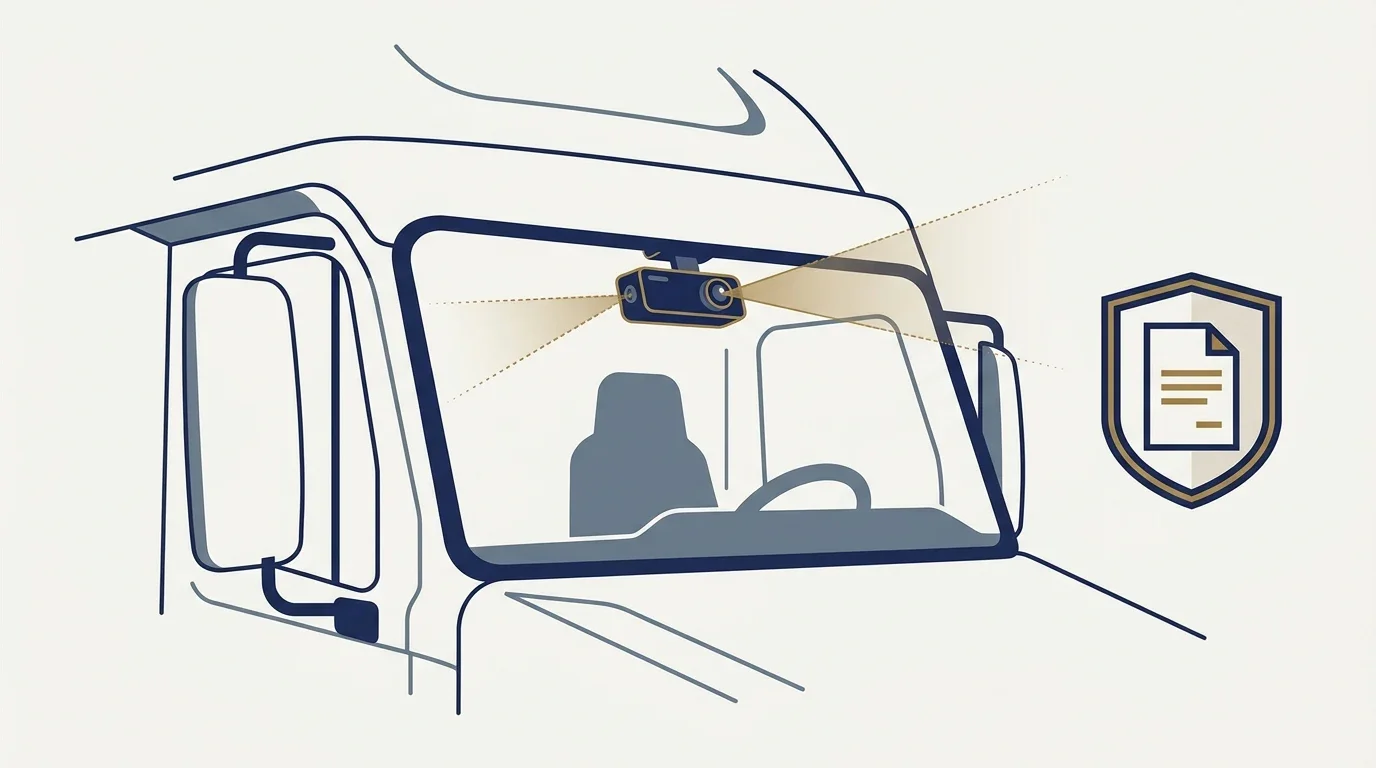
A driver-facing camera is an interior windshield lens that records a trucker’s face, hands, and cab activity before and during a crash. Many trucking companies resist these devices because cab video creates four headaches: driver turnover, audio and privacy compliance risks, equipment costs, and courtroom proof of phone use or fatigue. Fleets that install dual-lens units still often mute audio, disable the inward lens, or save only brief triggered clips. If a commercial truck injured you, our California truck accident lawyers act quickly to lock down dashcam video and electronic logs before routine overwrites erase them.
Why trucking companies hesitate to install inward-facing cameras
Carriers weighing inward-facing cameras in trucks must balance insurance discounts against driver pushback and civil liability. According to FMCSA’s 2022 Large Truck and Bus Crash Facts, 5,837 large trucks were involved in fatal crashes nationwide, and 82% of those fatalities occurred outside the truck. The same FMCSA crash report recorded 120,000 large trucks in injury crashes and a driver-related factor for 33% of truck drivers in fatal crashes—with careless or inattentive operation second after speeding.
Four operational and legal pressures explain why many fleets resist cab-facing video until an insurer requires it:
- Litigation exposure from “smoking gun” footage: Outward road cameras can help defend a trucker who was cut off. By contrast, an inward lens records every glance at a phone, missed mirror check, or sign of microsleep. In a serious injury claim or driver-facing camera lawsuit, interior footage often prevents a carrier from shifting blame onto the passenger car driver.
- Driver recruitment, retention, and false-positive friction: Commercial drivers routinely leave fleets that deploy AI cab cameras. Many object to automated alerts triggered by yawning, sipping water, or checking side mirrors. Some carriers turn the inward lens off unless a driver logs repeated alerts, or allow sun visors and covers that block the lens.
- Audio wiretapping and workplace privacy disputes: Recording sound inside a cab creates state-law risk. Under Cal. Penal Code § 632, California prohibits recording confidential communications without all-party consent and bars unlawful audio under section 632(d). Multi-state carriers also face labor pushback, including cases where a court or arbitrator orders a trucking company to remove driver-facing cameras under a union contract or biometric privacy law. Labor restrictions, however, do not excuse hiding existing crash video in California civil discovery.
- Hardware, cellular upload, and safety-review costs: Dual-camera subscriptions, cellular video uploads, and safety staff to triage daily triggers add steady overhead. Self-insured and smaller fleets often skip inward lenses unless underwriting mandates them.
Are driver-facing cameras required by FMCSA or California law?
Federal law allows cab cameras, but it does not mandate them. When drivers or crash victims ask whether driver-facing cameras are legal in the U.S., the primary federal rule is 49 CFR § 393.60(e)(1)(ii). That regulation allows FMCSA-defined vehicle safety technologies to mount on the interior windshield within 8.5 inches below the upper wiper edge or 7 inches above the lower wiper edge, outside the driver’s sight lines.
In California, Cal. Veh. Code § 26708(b)(13)–(14) governs windshield video event recorders and commercial safety technology. Devices under subsection (b)(13) require visible notice if passenger conversations may be recorded. Employee drivers also hold a statutory right to free, unedited copies of their recordings within 5 days of a request.
| Camera or Record Type | Governing Federal / California Rule | Typical Trigger or Retention Window | Value in a Crash Investigation |
|---|---|---|---|
| Road-Facing Dashcam | 49 CFR § 393.60(e)(1)(ii); Cal. Veh. Code § 26708(b)(14) | Loop recording or event upload (varies by vendor) | Shows lane drift, following distance, traffic signals, and braking |
| Driver-Facing AI Camera | Permitted, not mandated; Cal. Veh. Code § 26708(b)(13) limits | Up to 30 seconds pre- and post-trigger under § 26708(b)(13)(C) | Captures phone use, distraction, fatigue, or whether lens was covered |
| In-Cab Audio Recording | Cal. Penal Code § 632 all-party consent | Often disabled by fleet configuration | Generally excluded if recorded without all-party consent |
| ELD & Supporting Records | 49 CFR § 395.8(k)(1) | Motor carrier must retain for at least 6 months | Proves hours-of-service violations and fatigue timeline |
Notice the retention gap in that comparison. Under 49 CFR § 395.8(k)(1), carriers must retain electronic logging device (ELD) records and supporting documents for at least 6 months. By contrast, Cal. Veh. Code § 26708(b)(13)(C) caps covered windshield event recorders at 30 seconds before and after a triggering event. No federal rule forces carriers to store non-triggered cab video loops indefinitely.
Why road-facing cameras do not tell the whole story
Outward-facing video shows traffic ahead of the bumper, not what the driver did inside the cab before impact. When a semi-truck rear-ends stopped traffic or drifts across lanes, road footage alone lets an insurer claim a sudden cut-off or blind-spot merge.
Inward video, telematics, and post-crash drug and alcohol testing records fill that gap together. They can show whether the trucker looked at a tablet, held a phone, nodded off, or drove with the inward lens disabled. Even if a fleet claims no cab video exists, vendor configuration logs often tell the story. Those logs show whether the carrier shut off the interior lens, set a high G-force trigger threshold, or allowed a visor to block the camera.
How California truck crash victims preserve cab video before it overwrites
Dashcam memory cards and cloud queues overwrite on short cycles. Waiting weeks for an adjuster’s reply often means critical video is gone. Injured motorists and families can protect digital crash proof by acting early:
- Document the tractor and cab equipment safely at the scene: Outside the roadway, photograph the carrier name, door USDOT number, trailer number, and windshield camera housings.
- Send an immediate written spoliation letter through counsel: A spoliation letter is a formal notice instructing the carrier and its telematics vendor—such as Samsara, Lytx, Netradyne, or SmartDrive—not to overwrite or alter crash evidence. Identify the tractor, trailer, date, and highway location, and demand preservation of raw video, trigger settings, GPS traces, and audit logs.
- Demand corroborating federal records alongside video: Pair the camera hold with requests for 6-month ELD logs, dispatch messages, engine-module downloads, and qualification files, as outlined in our guide on preserving truck accident evidence.
- Enforce sanctions if footage disappears after notice: Under Cal. Evid. Code § 413, a judge or jury may consider a party’s willful suppression of evidence when weighing the facts against the carrier.
Deadlines and Orange County truck crash representation
California generally gives injured victims two years from the collision date to file a personal injury or wrongful death lawsuit under Cal. Code Civ. Proc. § 335.1. Claims involving a public-entity truck or government roadway carry a much shorter six-month deadline under Cal. Gov. Code § 911.2. Dashcam cards and electronic modules overwrite long before those statutory filing deadlines arrive.
From our headquarters at 18301 Irvine Blvd, Tustin, CA 92780, Nordean Law, APC serves crash victims in Tustin and across Orange County freeways including I-5, I-405, SR-91, and SR-55. Our truck accident team issues rapid preservation demands, subpoenas dashcam vendor audit trails, and prepares every commercial trucking case for trial when insurers refuse fair compensation.
Disclaimer & Free Case Review: This article is for general informational purposes only and does not constitute legal advice. Past results do not guarantee a similar outcome. Injured in a commercial truck crash in Southern California? Call Nordean Law, APC at 888.254.3222 or contact us for a free consultation — no fee unless we win.
Frequently asked questions
Are driver-facing cameras required by FMCSA or legal in California commercial trucks?
No federal rule requires driver-facing cameras. Under 49 CFR § 393.60(e)(1)(ii), FMCSA permits windshield-mounted safety devices outside the driver's sight lines. In California, Cal. Veh. Code § 26708(b)(13)–(14) allows commercial video event recorders subject to placement, notice, and 30-second event limits.
Why do some trucking companies refuse or remove inward-facing cab cameras?
Motor carriers often resist or disable inward lenses because of driver turnover, union or arbitration privacy disputes, in-cab audio rules under Cal. Penal Code § 632, and civil litigation risk. Cab video can prove phone use, drowsiness, or distraction in a driver-facing camera lawsuit.
How long do commercial truck dashcams keep video footage after a crash?
Retention varies widely by fleet configuration. Under Cal. Veh. Code § 26708(b)(13)(C), certain windshield video event recorders store no more than 30 seconds before and after a trigger. Unlike 6-month ELD retention under 49 CFR § 395.8(k)(1), non-triggered cab video can overwrite within days.
Can a truck accident victim subpoena driver-facing camera footage in a California lawsuit?
Yes. If an inward camera captured a collision or triggered event, an injured victim's attorney can demand immediate preservation and subpoena the video, telematics, and audit logs. Under Cal. Evid. Code § 413, willful suppression of evidence after notice can bring adverse legal inferences.